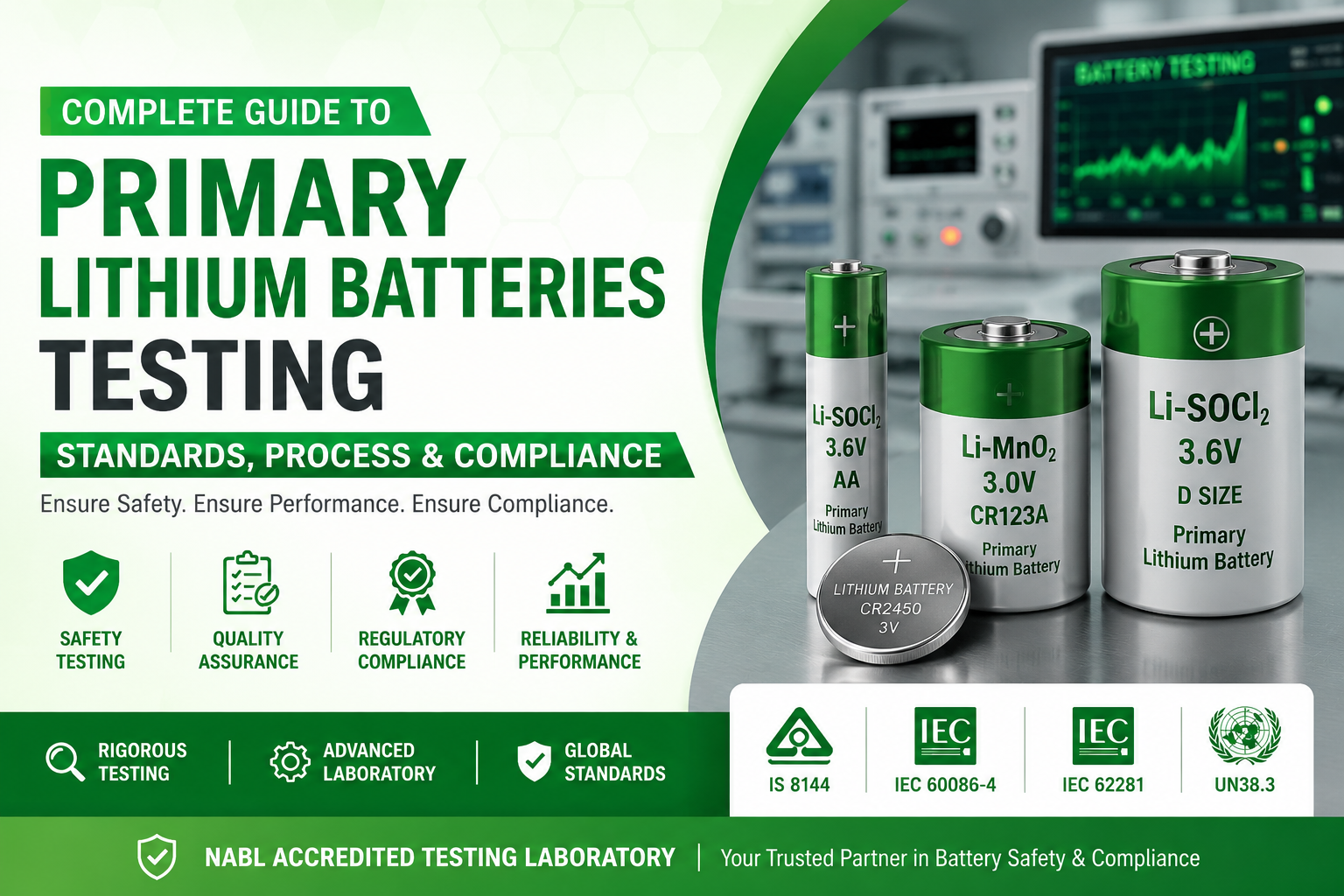
Primary lithium batteries are widely used in medical devices, smart utility meters, IoT products, defence systems and industrial automation because of their long shelf life and high energy density. Since these batteries contain metallic lithium, they must undergo comprehensive safety testing before being placed on the market.
This guide explains the standards, testing procedures, compliance requirements and best practices for Primary Lithium Batteries Testing.
What Are Primary Lithium Batteries?
Primary lithium batteries are non-rechargeable batteries that use metallic lithium as the anode.
- High energy density
- Long shelf life
- Low self-discharge
- Reliable in harsh environments
- Wide operating temperature range
Common Applications
- Medical Devices
- Smart Electricity Meters
- IoT Devices
- Industrial Sensors
- Military Equipment
- Security Systems
- GPS Trackers
Why is Primary Lithium Batteries Testing Important?
Testing helps manufacturers verify product safety, reliability and regulatory compliance before commercial launch.
- Fire Hazards
- Thermal Runaway
- Explosion
- Leakage
- Internal Short Circuit
- Transportation Failures
Applicable Standards
IS 8144
Indian safety requirements for primary batteries.
IEC 60086-4
International safety standard for primary lithium batteries.
IEC 62281
Transportation safety requirements.
UN38.3
Mandatory transport testing for lithium batteries.
Primary Lithium Batteries Testing Process
- Sample Verification – Verify specifications, ratings and documentation.
- Visual Inspection – Inspect construction, labels and damage.
- Electrical Safety Testing – Voltage, capacity, short circuit and forced discharge.
- Mechanical Safety Testing – Impact, crush, vibration and shock.
- Thermal Testing – Heating, temperature cycling and abuse.
- Environmental Testing – Altitude, humidity and climatic conditions.
- Report Generation – Technical review and certification report.
Common Tests Performed
- Altitude Simulation
- External Short Circuit
- Forced Discharge
- Heating Test
- Impact Test
- Crush Test
- Mechanical Shock
- Vibration Test
- Leakage Test
- Capacity Verification
- Visual Inspection
- Electrical Performance
Industries Served
- Medical Device Manufacturers
- Smart Meter Manufacturers
- IoT Device Companies
- Defence Equipment Suppliers
- Industrial Automation OEMs
Benefits of an NABL Accredited Laboratory
- Accurate Test Results
- Calibrated Equipment
- Qualified Engineers
- International Acceptance
- Fast Turnaround
- Complete Documentation
Frequently Asked Questions
Conclusion
Primary Lithium Batteries Testing is essential for product safety, regulatory compliance and market acceptance. Testing against IS 8144, IEC 60086-4, IEC 62281 and UN38.3 helps manufacturers improve quality and meet certification requirements.
Request Battery Testing