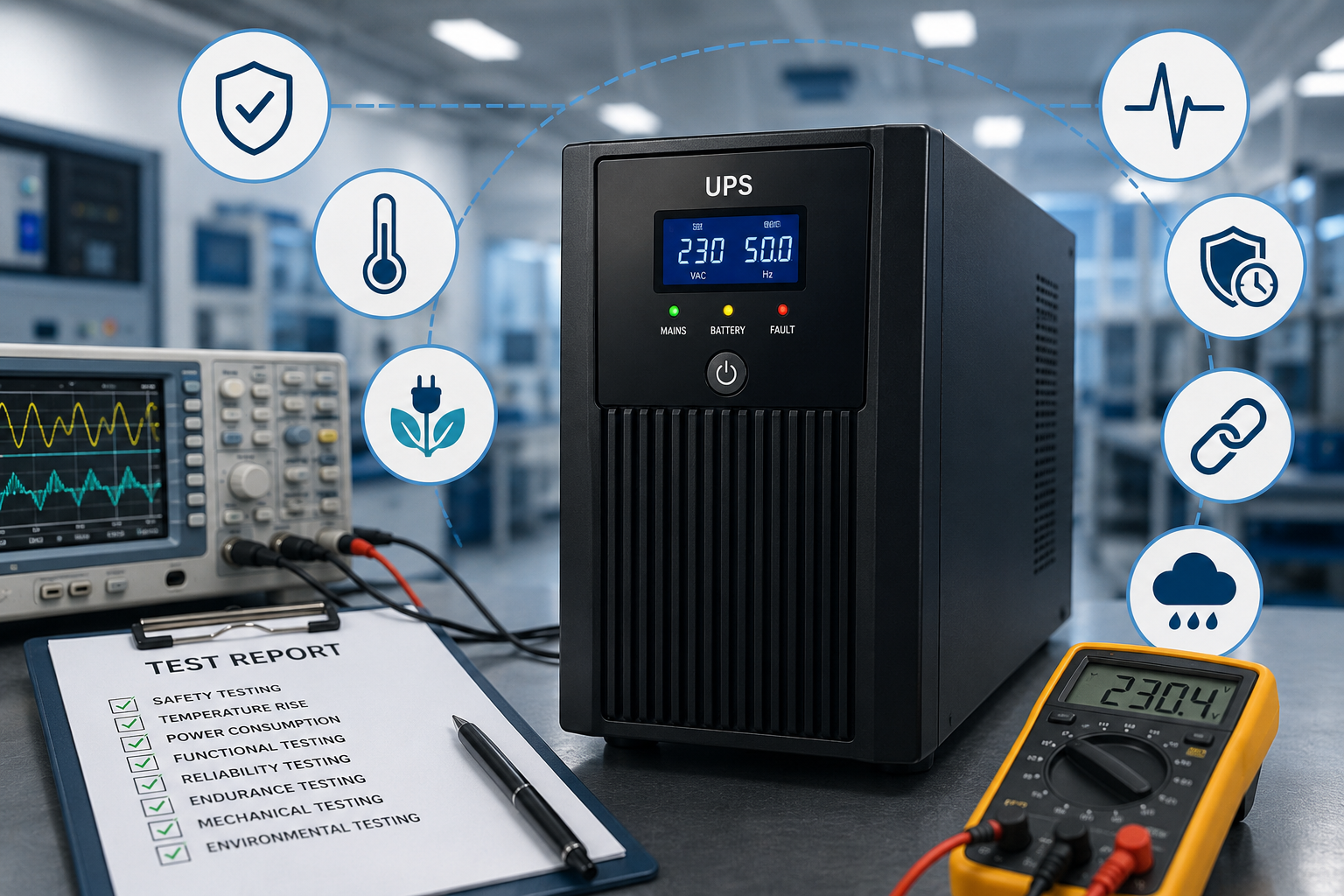
Key Test Parameters for IT Equipment Compliance and Safety
Why IT Equipment Safety Testing Is Important
Modern IT equipment powers businesses, homes, hospitals, factories, and data centers. Products such as servers, networking devices, desktop computers, power supplies, and IoT gateways must work safely throughout their life.
Before these products reach customers, they must comply with international safety standards such as IEC/EN 62368-1. This standard replaces the older IEC 60950-1 and IEC 60065 standards and focuses on hazard-based safety engineering.
Testing is more than a regulatory requirement. It helps manufacturers:
- Protect users from electric shock
- Prevent overheating and fire
- Improve product reliability
- Reduce warranty claims
- Avoid expensive product recalls
- Speed up certification and market approval
At Matrix Test Labs, we perform comprehensive electrical, thermal, mechanical, and environmental testing to verify product safety and compliance.
Key IT Equipment Test Parameters
1. Input Current Test
The Input Current Test checks whether the equipment draws the correct amount of electrical current during normal operation.
If a device consumes more current than specified, it may overload electrical circuits or generate excessive heat.
What We Check
- Rated input current
- Maximum operating load
- Voltage and frequency compliance
- Power consumption stability
Benefits
- Prevents overloaded circuits
- Improves electrical safety
- Ensures compliance with IEC 62368-1
2. Insulation Resistance Test
Electrical insulation prevents dangerous current from reaching metal parts that users can touch.
The Insulation Resistance Test verifies that the insulation between live components and accessible surfaces remains effective.
Test Method
A high DC voltage, typically 500 V, is applied using a megohmmeter. The insulation resistance is then measured in megaohms (MΩ).
Benefits
- Prevents electric shock
- Detects damaged insulation
- Improves product reliability
- Ensures long-term safety
3. Leakage Current Test
Even properly insulated equipment may allow a very small amount of current to flow through filters and internal components.
The Leakage Current Test measures this current to ensure it remains within safe limits.
What We Evaluate
- Normal operating conditions
- Single fault conditions
- Touch current
- Ground leakage current
Benefits
- Protects users
- Prevents electric shock
- Meets IEC 62368-1 requirements
4. Temperature Rise Test
Electronic components naturally generate heat. Excessive temperatures can reduce product life or create fire hazards.
The Temperature Rise Test measures the heat generated while the equipment operates at full load.
Components Tested
- Transformers
- Power supplies
- Printed circuit boards
- Integrated circuits
- External surfaces
Benefits
- Prevents overheating
- Improves product lifespan
- Reduces fire risk
- Ensures thermal safety
Functional Testing
A product must not only be safe but also perform correctly.
Matrix Test Labs verifies that IT equipment continues operating under normal and heavy workloads.
Functional Tests Include
- Power cycling
- Boot performance
- Communication interfaces
- USB and Ethernet ports
- Data transfer stability
- Power interruption recovery
Environmental Testing
Many IT products operate in demanding environments.
Environmental testing checks whether equipment can withstand changes in temperature and humidity.
Tests Performed
Temperature Cycling
The equipment is exposed to repeated heating and cooling cycles.
Humidity Testing
The product operates in high-moisture conditions to evaluate corrosion resistance.
Storage Testing
Products are tested under extreme storage temperatures to ensure safe transportation.
Benefits
- Longer product life
- Improved reliability
- Better field performance
Mechanical Testing
IT equipment experiences vibration, accidental drops, and transportation stress before installation.
Mechanical testing ensures that products remain safe after physical impacts.
Mechanical Tests
- Drop Test
- Shock Test
- Vibration Test
- Impact Test (IK Rating)
- Structural Strength Test
Benefits
- Protects internal components
- Improves enclosure strength
- Reduces transportation damage
- Enhances user safety
Summary of IT Equipment Safety Tests
| Test Parameter | Purpose |
|---|---|
| Input Current Test | Verifies electrical load |
| Insulation Resistance Test | Prevents electric shock |
| Leakage Current Test | Measures touch current |
| Temperature Rise Test | Controls overheating |
| Functional Testing | Verifies product operation |
| Environmental Testing | Tests temperature and humidity resistance |
| Mechanical Testing | Evaluates physical durability |
Why Choose Matrix Test Labs?
Matrix Test Labs offers reliable testing solutions for manufacturers of IT and electronic products.
Our laboratory provides:
- IEC/EN 62368-1 compliance testing
- Electrical safety evaluation
- Thermal performance testing
- Mechanical durability testing
- Environmental testing
- Fast and accurate reports
- Experienced technical experts
- Modern laboratory infrastructure
Our team works closely with manufacturers to simplify compliance and reduce certification time.
Conclusion
IT equipment must meet strict safety and performance standards before entering the market. Comprehensive testing helps manufacturers identify design issues early, improve product quality, and protect end users.
At Matrix Test Labs, we provide complete IT equipment testing services based on IEC/EN 62368-1 and other international standards. Whether you need pre-compliance testing, certification support, or full product evaluation, our experts are ready to help.
Contact Matrix Test Labs today to schedule your IT equipment testing and ensure your products meet global safety and compliance requirements.
SEO Keywords Used Naturally
- IT equipment test parameters
- IT safety testing
- IEC 62368-1 testing
- Electrical safety testing
- IT equipment compliance
- Matrix Test Labs
- Leakage current test
- Insulation resistance test
- Temperature rise test
- Mechanical testing for IT equipment
This version should achieve a Flesch Reading Ease score of approximately 60–70, making it significantly more readable while remaining technically accurate and SEO-friendly.